

By JC Montenegro, PhD
(Boyle Heights, California – September 26, 2026) – The Salesian Family Youth Center welcomed more than 24 staff members for its annual staff training, a day set aside not only for professional development, but also for reflection, community building, and remembering why they do the work they do.
The training brought the entire staff together at the Youth Center, creating an opportunity to step away from daily responsibilities, get to know one another in a different way, and reflect on the mission that unites them as a team.
The atmosphere throughout the day was one of collaboration and openness. Through activities, conversations, reflections, and presentations, staff members had the opportunity to consider both their professional responsibilities and their personal commitment to the young people and families they serve.
Why Are You Here?
One of the first reflections of the day centered on a simple but important question: Why are you here?

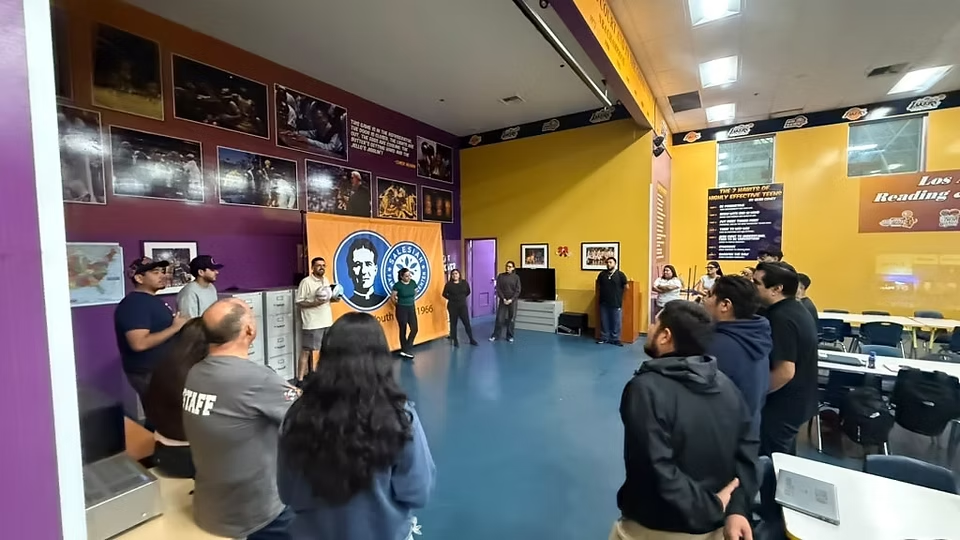

For the staff, this question goes to the heart of their Salesian identity. Their presence at the Salesian Family Youth Center is about much more than having a job or receiving a paycheck. There is a deeper reason behind their decision to work with young people and families.
For many, this work is an opportunity to give back to society through the gifts, talents, experiences, and opportunities they themselves have received.
When people understand the reason behind their presence, their daily responsibilities can take on a different meaning. A conversation with a young person, helping a family, creating a welcoming environment, or simply being present can become part of something much larger.
Learning How to Be Present With Young People
Another important part of the training focused on how staff members approach young people and how they can strengthen their understanding of the Salesian Preventive System.
The Preventive System emphasizes Reason, Religion, and Loving-Kindness, principles that guide the way Salesians and their collaborators interact with young people and help create an environment where they feel safe, respected, welcomed, and valued.
Loving-kindness, in particular, is essential to the Salesian approach. Young people need to know that they belong. They need adults who are willing to listen to them, encourage them, recognize their strengths, and walk alongside them.
Through a skit and reflection, staff members had an opportunity to consider how their everyday interactions can either strengthen or weaken a young person’s sense of belonging.
The feedback from staff showed that this reflection resonated with many of them. One staff member reflected on learning different ways to interact with children and how to better establish appropriate consequences. Another shared that the training was a reminder that staff members are responsible for the environment they create at the Youth Center and should work harder to make it more welcoming and respectful.
These may seem like small changes, but they are precisely the kinds of changes that shape a young person’s experience.
Taking Care of Ourselves So We Can Serve Others
Throughout the day, the conversation also moved beyond work with young people and toward personal well-being.
Several staff members reflected on the importance of self-care, mental health, time management, self-respect, and being present.
One staff member shared that they learned the importance of prioritizing mental health and recognizing when it is necessary to ask for help. Others reflected on separating personal life from work, being more present, letting go of what they cannot control, and being intentional about the way they speak to others.
These reflections reminded staff that their ability to accompany young people is connected to how they take care of themselves.
While people cannot always control what happens around them, they can continue working on themselves, learning, growing, and becoming more intentional in the way they respond to the people around them.
A Moment of Spiritual Reflection
Luis and Andres led the staff through a Lectio Divina, inviting everyone to reflect on God’s call. This provided another opportunity to step away from the practical aspects of their work and consider the deeper spiritual dimension of their mission.
The work of the Salesian Family Youth Center is rooted in a call to accompany young people, and taking time to listen and reflect allows staff members to reconnect with that purpose.
For many, the day became an opportunity to reflect on their own journey and the reasons they continue to serve.
From Reflection to Action
The final part of the training focused on the question: What are we going to do with the information we received today?

A training day has little meaning if what is discussed remains in the room. The challenge is to take what was learned and bring it back to programs, relationships with young people, coworkers, and families.
Staff members made commitments ranging from improving communication and time management to becoming better leaders, creating stronger boundaries, being more intentional in their interactions, taking better care of themselves, and continuing to improve their work with young people.
One staff member summarized this commitment by saying, “I commit to being better than yesterday.”
Another reflected on the importance of self-reflection, recognizing that without taking care of ourselves and reflecting on our own actions, it becomes more difficult to improve.
These commitments are important because the mission is lived through daily actions.
A Growing Salesian Community
The Youth Center was also grateful to have two members of its Board, Evelyn and Miriam, participate in the training alongside the staff. They joined the activities and conversations as regular participants, sharing their perspectives when appropriate.


Their presence was a reminder that the mission of the Salesian Family Youth Center belongs to a broader community. Staff, leadership, Board members, families, supporters, and young people all have a role in building and sustaining the work.
The Youth Center also welcomed Televisión Española, whose team is continuing work on a documentary project highlighting the work of the Salesians in Boyle Heights. The team is spending time in the community, recording the programs, people, and daily work that make up the Salesian presence there.
Their presence during this period provides another opportunity to share the reality of the community being served and to show the many ways in which the Salesian mission is lived out each day in Boyle Heights. The project is connected with Pueblo de Dios, a program of Televisión Española that features stories of people and communities involved in service and social mission.
You can learn more about the program through Televisión Española – Pueblo de Dios.
More Than a Training Day
The annual staff training was about much more than completing a required activity. It was an opportunity to stop, listen, reflect, reconnect with purpose, and ask whether the way the staff works reflects the mission they are called to live.
It was encouraging to see staff members take the different reflections seriously and intentionally. More than 24 people came together from different experiences, responsibilities, and backgrounds, yet they were able to spend the day asking many of the same questions: How can I improve? How can I better serve young people? How can I support my coworkers? How can I contribute to creating a place where young people feel that they belong?
Those questions will continue beyond September 26.
The real work begins when staff members return to their programs and put those reflections into practice.
As Salesians, the staff recognizes that their presence matters. The way they welcome a young person matters. The way they listen matters. The way they correct, encourage, communicate, and accompany matters.
The hope is that this training will help each member of the team continue growing—not only as a staff member, but also as a person committed to the young people and families of Boyle Heights.
The mission is lived one relationship at a time.
And it starts with being present.
Editor’s Note: This article was originally published on the Salesian Family Youth Center website.